From Routine Labs to Precision Health: The Biomarker Revolution
How comprehensive blood testing combined with clinical context and longitudinal data creates a new paradigm for proactive, personalized healthcare.
For most of modern medicine, blood testing has served a single purpose: confirming or ruling out disease. You feel sick, your doctor orders labs, the results either explain your symptoms or they do not. This reactive model has saved countless lives — but it has a fundamental limitation. By the time a standard lab test catches a problem, the problem has often been developing for years.
Precision blood testing represents a paradigm shift. Instead of waiting for disease to declare itself, comprehensive biomarker analysis identifies the physiological patterns that precede disease — creating a window for intervention that reactive medicine cannot offer.
The Reactive Model: Where Standard Labs Fall Short
Standard laboratory medicine is built around diagnostic thresholds. Your fasting glucose is either diabetic (≥126 mg/dL) or it is not. Your TSH is either “abnormal” or “within range.” These binary distinctions are clinically necessary — but they create a blind spot: the vast gray zone between optimal health and diagnosable disease.
Consider this timeline of Type 2 diabetes progression:
| Stage | What Standard Labs Show | What Comprehensive Testing Reveals |
|---|---|---|
| Year 0–3 | All values 'normal' | Rising fasting insulin, HOMA-IR trending upward, early triglyceride elevation |
| Year 3–7 | Glucose 'high-normal' (99 mg/dL) | Insulin resistance confirmed, HbA1c trending from 5.2 → 5.5, ApoB elevated, inflammatory markers rising |
| Year 7–10 | Pre-diabetes diagnosed (HbA1c 5.7–6.4) | Pattern established years earlier; intervention window may have already narrowed |
| Year 10+ | Type 2 Diabetes diagnosed | Disease now requires pharmacological management that earlier intervention may have prevented |
The patient in this example was “healthy” by standard criteria for the first seven years. Comprehensive biomarker testing would have flagged metabolic dysfunction at year one.
The Precision Approach: Data + Context = Strategy
Precision blood testing is not just about running more tests. It is about building a clinical framework where data is interpreted in context and used to drive proactive decision-making.
1. Comprehensive Data Collection
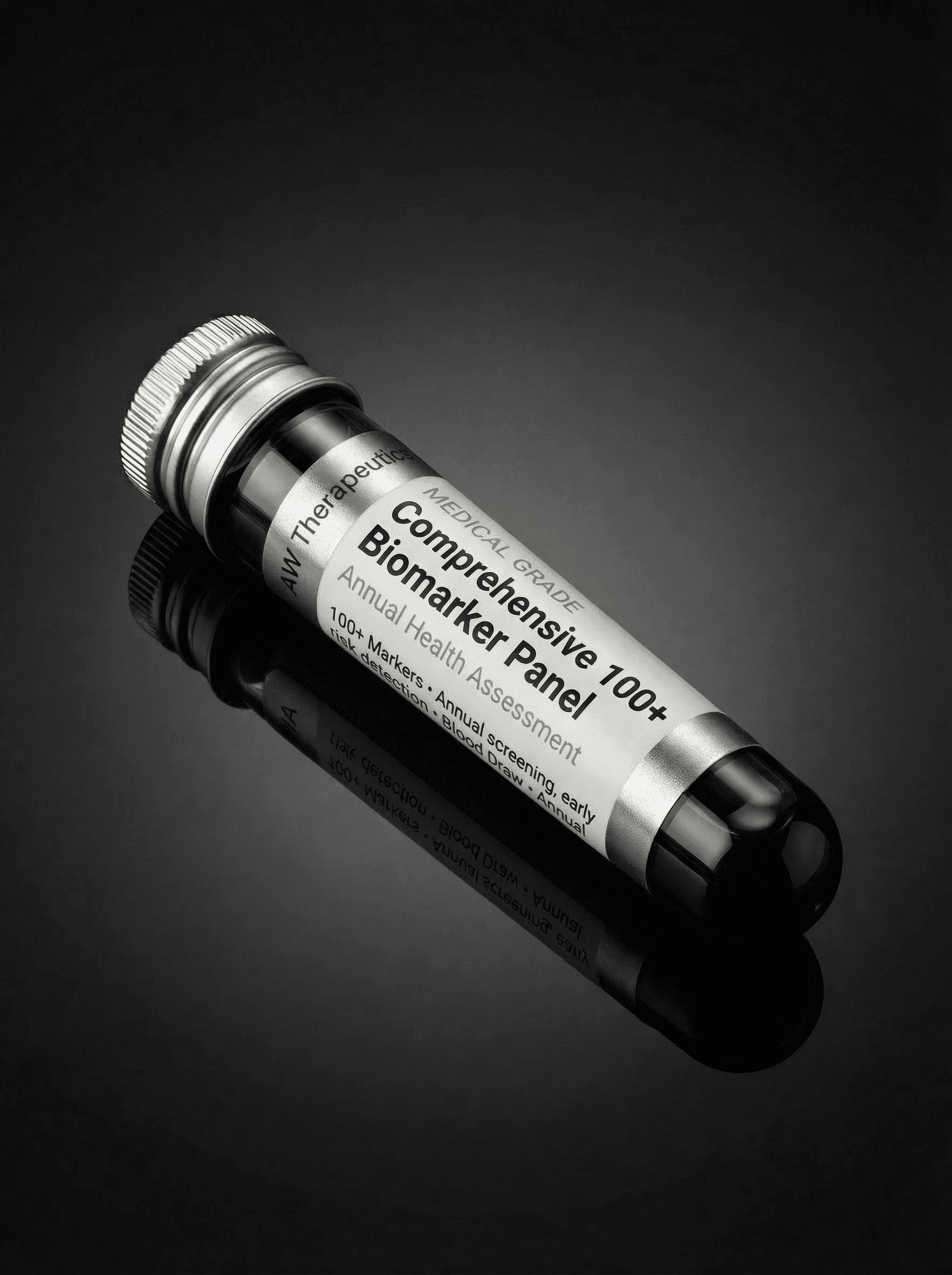
A 100+ biomarker panel evaluates metabolic, cardiovascular, hormonal, thyroid, immune, inflammatory, hepatic, renal, and nutritional markers in a single blood draw. This creates a multi-system snapshot of physiological function — not a narrow view through one diagnostic lens.
2. Clinical Context Integration
Raw numbers without context are meaningless. A testosterone level of 400 ng/dL in a 25-year-old athlete tells a very different story than the same value in a 55-year-old with fatigue and muscle loss. Precision testing integrates biomarker data with medical history, family history, lifestyle factors, and clinical goals to build a complete picture.
3. Longitudinal Trend Analysis
A single lab result is a snapshot. Annual comprehensive testing creates a longitudinal dataset — your personal physiological trendline. This is where the real clinical power emerges. Trends in inflammatory markers, hormonal levels, metabolic indicators, and organ function over time reveal trajectories that single-point values cannot.
4. Personalized Intervention Strategy
With comprehensive data, clinical context, and trend analysis, providers can design interventions tailored to your specific physiology — not population averages. This might mean targeted supplementation for a specific deficiency, hormonal optimization based on your individual decline pattern, or lifestyle modifications guided by your metabolic data.
What Precision Testing Looks Like in Practice
| Dimension | Routine Labs | Precision Biomarker Testing |
|---|---|---|
| Scope | 15–20 markers | 100+ markers across 8 physiological systems |
| Purpose | Disease detection | Risk identification + disease prevention |
| Interpretation | In-range vs. out-of-range | Optimal ranges, trend analysis, clinical context |
| Frequency | When symptomatic or annual minimum | Annual baseline with targeted follow-up |
| Outcome | Diagnosis or reassurance | Personalized health strategy and early intervention |
The Insurance Question
Comprehensive biomarker testing has historically been positioned as “premium” or “out-of-pocket.” This perception is changing.
In many cases, medically appropriate laboratory testing is eligible for coverage through a patient's existing health insurance benefits. When tests are ordered by a licensed provider based on clinical indications — risk factors, family history, symptoms, monitoring of existing conditions — insurance coverage applies according to plan terms and medical necessity criteria.
The economics are compelling from a payer perspective as well: preventing a single cardiovascular event or catching diabetes five years earlier saves orders of magnitude more than the cost of annual comprehensive labs. The healthcare system is slowly catching up to this math.
The Americare Wellness Model
Whole-Person Assessment
We do not treat biomarkers in isolation. Every result is interpreted within the context of your complete health picture — history, genetics, lifestyle, goals.
Provider-Guided Interpretation
Your results are reviewed by an Americare Wellness provider who builds a personalized care strategy — not a generic report with reference ranges.
Annual Continuity
Each annual screening builds on the last, creating a longitudinal health record that becomes more powerful and predictive over time.
“Precision health is not about running every test available. It is about running the right tests, interpreting them in context, and using the data to make decisions that change outcomes.”
The biomarker revolution is not a future possibility — it is happening now. The question is not whether comprehensive blood testing will become the standard of care, but how soon.
Disclaimer
This article is for informational purposes only and does not constitute medical advice. Laboratory testing should be ordered and interpreted by a licensed healthcare provider. Insurance coverage for laboratory testing varies by plan and is subject to medical necessity determinations. This content does not guarantee insurance coverage for any specific test or panel.
Ready to move beyond routine labs? Explore precision biomarker screening.
View the Annual Comprehensive Wellness Screen →